 The New Experience Newspapers Online News Indepth, Analysis and More
Apapa, Tin Can Ports Break Into World Bank’s Top 20 for Efficiency Gains
By our Correspondent
Nigeria’s two busiest seaports have earned international acclaim after the World Bank named Apapa and Tin Can Island Ports among the most improved container terminals globally. The recognition signals a major turnaround for the country’s maritime industry and reflects years of structural reforms and technology upgrades led by the Nigerian Ports Authority and the Nigeria Customs Service.
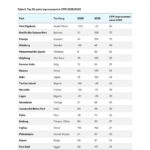
The ranking was published in the World Bank’s 2025 Container Port Performance Index, released in June 2026. The CPPI evaluates more than 400 ports worldwide using real-time data on vessel stay time and berth productivity. Both Lagos ports secured spots among the top 20 for year-on-year efficiency improvements, a category that tracks which facilities are modernizing fastest rather than absolute size.
 Industry observers attribute the leap to coordinated changes across infrastructure, policy, and process. Over the last three years, the NPA has prioritized dredging, equipment acquisition, and digital port community systems to cut ship waiting time and truck turnaround. In parallel, the Nigeria Customs Service has rolled out its Trade Modernisation Project, introducing automated risk management, a unified customs window, and non-intrusive inspection systems that have reduced cargo dwell time at the terminals.
The operational gains are already feeding into national trade figures. Data from the National Bureau of Statistics shows Nigeria posted a trade surplus of ₦7.54 trillion in Q1 2026, marking the fifth consecutive quarterly surplus since 2024. Exporters and importers have reported fewer delays, while shipping lines are gradually restoring calls that were diverted to neighboring countries during years of congestion.
For shipping companies, the change is measurable. “Twelve months ago we were planning 72-hour berth windows at Apapa with a lot of contingency. Today we are averaging under 40 hours and we can actually trust the schedule,” said Captain Emmanuel Okon, West Africa operations manager for a major European container line. “The biggest difference is predictability. When a port is predictable, we deploy bigger ships and cut surcharges.”
Freight forwarders who handle last-mile clearance say the Customs automation has removed much of the physical interface that bred delays. “Before, a container could sit for 21 days just waiting for examination and manual release. Now with the unified window and scanners, we are seeing 5 to 7 days for compliant cargo,” noted Mrs. Yetunde Balogun, CEO of a Lagos-based logistics firm and member of the Association of Nigerian Licensed Customs Agents. “It is not perfect yet, but clients are noticing the cost difference.”
Speaking on the development, NPA Managing Director Dr. Abubakar Dantsoho said the ranking validates the current administration’s focus on maritime infrastructure. He noted that the policy direction of President Bola Ahmed Tinubu and the oversight of the Minister of Marine and Blue Economy, Gboyega Oyetola, have been critical in unlocking investment for equipment renewal and port expansion. According to him, the momentum now exists to position Nigerian ports as the preferred cargo hub for West and Central Africa.
 On his part, Comptroller General of Customs, Adewale Adeniyi, said the World Bank’s assessment confirms that the Service’s modernization drive is aligned with global best practice. He explained that customs administrations worldwide are under pressure to deliver speed, transparency, and security at the same time. The Trade Modernisation Project, he said, was designed to meet those demands by digitizing declarations, integrating government agencies on a single platform, and using data analytics to target high-risk cargo while fast-tracking compliant trade.
Still, operators caution that the gains must be protected. “We’ve seen improvements, but rail evacuation from Apapa is still epileptic and power for the scanners isn’t 24/7,” said Alhaji Musa Ibrahim, a port terminal user and dry cargo importer. “If we lose momentum on infrastructure, the ships will start skipping us again. This World Bank ranking should be a start, not a victory lap.”
Analysts say the World Bank’s endorsement could shift investor sentiment toward Nigeria’s blue economy. With port efficiency directly tied to the cost of imports and exports, the improvements at Apapa and Tin Can are expected to lower logistics costs, support manufacturers, and strengthen Nigeria’s competitiveness under the African Continental Free Trade Area.
Maritime stakeholders are now watching for sustained investment in rail evacuation, inland dry ports, and power supply to ensure the gains are not reversed. For now, the recognition places Nigeria’s flagship ports on a new global map, with both government and private operators under pressure to prove the turnaround is permanent.