 The New Experience Newspapers Online News Indepth, Analysis and More
From Gas Bubbles Under Floors To Deaths And Fires: Bille Community Faces Extinction Threat
By prince Benson Davies
A community in Rivers State is living on the edge of a major national disaster as uncontrolled gas emissions beneath homes, schools and waterways have now claimed its first human life.
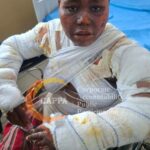
 Corporate Accountability and Public Participation Africa (CAPPA) on Tuesday confirmed the death of Ms. Joy Amos, a 29-year-old resident of Bille Kingdom in Degema Local Government Area, who died from severe burns sustained in a gas explosion inside her room.
Ms. Amos, an Ogoni native residing at No. 18, Opu Ibiila Community, Bille, was a victim of the mysterious gas leakage that has plagued the community since October 2025. CAPPA said the explosion occurred at about 8 a.m. on September 3, 2026, when gas that had built up in her room ignited, setting part of the building ablaze and shattering its windows.
She initially received treatment at a private clinic in Bille for nine days and was said to be improving. On September 12, she was transferred to Port Harcourt after a call from a person identified by community members as Dr. Ndubisi Akpu, who reportedly said he was calling from the Ministry of Health and that the government would take over her treatment. She died on Tuesday, September 22, and her remains were reportedly being taken to Ogoni for burial.
CAPPA, in a statement issued on Tuesday, described her death as a grave and avoidable consequence of a continuing environmental and public health emergency that authorities have failed to contain.
According to the organisation, the room where the explosion occurred has continued to produce a gas-bubbling sound beneath its cemented floor, accompanied by a noticeable gas-like odour, even after the blast.
The organisation recalled that during a field visit to Bille on July 6, 2026, it observed gas emissions from wells, boreholes, residential compounds, waterways and school grounds. It noted that government investigations have reportedly detected elevated levels of methane, hydrogen sulphide and carbon dioxide, alongside groundwater contamination and poor air quality.
Despite these findings, residents have not received a comprehensive public explanation of the source of the emissions, a clear emergency response plan or adequate protection.
CAPPA said the crisis reflects the wider injustice of oil and gas extraction in the Niger Delta, where host communities that sustain Nigeria’s petroleum industry and generate enormous revenues endure polluted environments, unsafe water, inadequate healthcare, energy poverty and declining livelihoods.
The organisation said the failure to conclusively determine the source of the emissions nearly one year after residents first raised the alarm demonstrates serious institutional weakness.
Beyond the death of Joy Amos, CAPPA documented a string of disturbing health and fire incidents in recent weeks.
On September 12, Mrs. Tamunosiepribo Igani reportedly became dizzy and collapsed while walking to the waterside. She fell into a ditch and sustained a serious leg injury that as of September 22 required specialist treatment in Port Harcourt.
Earlier on Tuesday morning, Ms. Deborah Adokiye Orlando, a teacher at State School One, Bille, reportedly collapsed while carrying out her duties.
Two separate household fires were also reported in August and September. In one incident, a fire reportedly broke out while Mrs. Damiete Akinda was attempting to light a mosquito coil. In another on September 7, a cooking fire reportedly spread through Mrs. Esther Dein’s home and destroyed substantial property.
Perhaps most alarming, CAPPA raised the alarm that some residents, driven by energy poverty, are now collecting the emerging gas and using it to power generators, while others are digging around their homes in search of gas outlets to channel for domestic use. The organisation warned that this desperate development could lead to more explosions, poisoning and mass casualties.
Reacting to the death, CAPPA’s Assistant Executive Director, Zikora Ibeh, said the government must abandon its fragmented response and treat the situation as a full-scale emergency.
“Joy Amos did not have to die. Her death followed months of warnings, confirmed environmental hazards and repeated appeals for government intervention. Yet Bille still has no comprehensive emergency plan, no publicly identified coordinating authority and no clear timetable for containing the emissions. The government cannot continue to treat the lives of citizens as expendable,” Ibeh said.
CAPPA called on the Federal Government, Rivers State Government, National Oil Spill Detection and Response Agency (NOSDRA), members of the National Assembly, the Nigerian Upstream Petroleum Regulatory Commission (NUPRC), the Nigerian Midstream and Downstream Petroleum Regulatory Authority (NMDPRA), the Federal Ministry of Environment, Federal Ministry of Health and Social Welfare, National Emergency Management Agency (NEMA), Federal Ministry of Petroleum Resources and other relevant authorities to establish a coordinated emergency response involving independent experts.
The organisation demanded comprehensive hazard mapping and evacuation of households, schools and public facilities found to be unsafe, specialist care for Mrs. Igani, full medical assessment for the collapsed teacher and free medical screening for all residents, especially children, pregnant women, older people and those reporting respiratory, neurological, gastrointestinal or skin-related symptoms.
It also called for immediate suspension of unsafe gas collection and use with clear public safety information, provision of alternative electricity and cooking energy, continuous air, water and soil testing, and a community-wide system for documenting fires, explosions, illnesses and injuries.
CAPPA further demanded that authorities publicly identify the institutions responsible for coordinating the response, issue a clear timetable for investigation, medical intervention and evacuation, and ensure comprehensive remediation, compensation and legal accountability once the source is established.
Reiterating its previous warning in its documentary and report, Danger! Bille Is Highly Flammable, Ibeh warned: “We would love to be proved wrong, but the reality is that human beings are living amid uncontrolled and deadly gas emissions. Nigeria is on the verge of a major national disaster, and Ms. Amos’s tragic death may only be the beginning of how much worse the situation could become if the authorities fail to act decisively.”