 The New Experience Newspapers Online News Indepth, Analysis and More
NIMASA Intensifies Coastal Surveillance, Moves To Sanction Cabotage Violators
By Prince Benson Davies
The Nigerian Maritime Administration and Safety Agency, NIMASA, has intensified its regulatory oversight of the nation’s maritime domain with a targeted enforcement operation codenamed Operation Sea Guardian, aimed at enforcing strict compliance with cabotage and other maritime regulations in Nigerian waters.
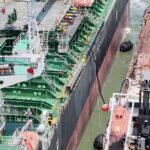
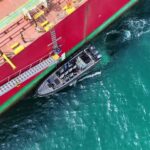
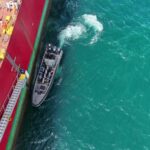 The operation marks a significant shift towards intelligence-driven enforcement, focusing on vessels of interest identified through advanced surveillance profiling and inter-agency intelligence sharing. It comes weeks after the Agency issued a stern marine notice warning stakeholders of enhanced enforcement and stiff sanctions for violations.
According to the Agency, Operation Sea Guardian was conducted as a follow-up enforcement initiative aimed at strengthening regulatory compliance, verifying cabotage obligations, assessing surcharge and levy compliance, and ensuring adherence to all applicable maritime regulations.
During the operation, which was concentrated within the Lagos maritime domain, several vessels were tracked, boarded and detained for various infractions bordering on nonconformity with cabotage requirements.
The vessels include MT HOLMES, MT FUJAIRAH ENERGY, JS GRATITUDE and MT BORA. The Agency disclosed that some of the vessels which have since regularised their infractions have been released, while others remain under detention pending compliance.
Operation Sea Guardian deployed critical assets of the Deep Blue Project to track, board, inspect and verify the operational status of vessels identified through intelligence reports and compliance indicators. The exercise was executed through effective inter-agency cooperation among NIMASA enforcement personnel, the Nigerian Navy, the Maritime Guard Command and C4i intelligence personnel.
Through this intelligence-driven process, vessels assessed as having a high likelihood of defaulting on cabotage obligations were identified and prioritized for further scrutiny.
These vessels were subsequently incorporated into a broader Target Bank that had been established during the first enforcement operation. The updated Target Bank provides a consolidated repository of vessels of interest and serves as the primary reference for planning and executing enforcement activities, ensuring that operational resources were focused on high-risk targets.
Reacting to the development, the Director General of NIMASA, Dr. Dayo Mobereola, emphasised that such operations will be more frequent going forward, warning that defaulting operators would face the full wrath of the law.
According to him, we had earlier served notice of enhanced enforcement of indigenous participation in our coastal and inland trade and this is exactly what we are doing. It is therefore in the interest of operators to ensure total compliance because defaulters will be visited with stiff sanctions in line with the law.
It will be recalled that NIMASA had on August 26, 2026, issued a marine notice pursuant to its statutory mandate to promote the development of indigenous capacity in international and coastal shipping trade to concerned stakeholders.
In the notice, the Agency clearly restated the conditions for engaging in Cabotage trade and warned that any vessel, company, operator, charterer or other stakeholder found to be in breach of the Cabotage Act or any other applicable Cabotage requirement shall be subject to appropriate enforcement action by the Agency in accordance with the law, without further recourse to violators.
Industry observers note that the latest enforcement drive underscores NIMASA’s resolve to protect indigenous shipping capacity and ensure that Nigeria’s coastal trade is dominated by compliant operators in line with the Cabotage Act.